
Why Your Indian Nominees Won't Save Your Family: The NRI Estate Planning Reality
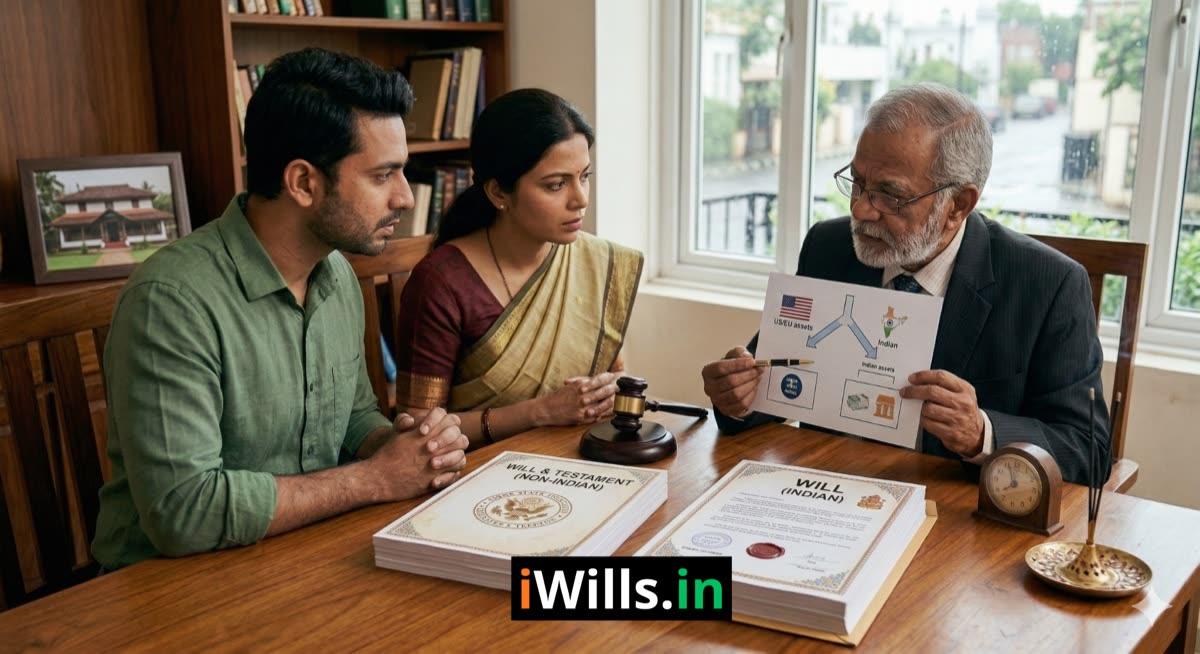
If you are an NRI settled abroad with a spouse and two children, you likely have a standard portfolio back home: a family flat, an equity portfolio in Zerodha or Groww, active mutual fund folios, pension dues, and NRE/NRO fixed deposits.
Most NRIs assume that because they dutifully added their spouse or parent as the nominee across these accounts, everything will transfer automatically.
That single assumption is the most common reason surviving families abroad end up trapped in Indian civil court battles.
The Legal Reality: Nominee vs. Legal Heir
Under Indian succession law, a nominee is merely a temporary trustee and custodian, not the legal owner. This principle has been reinforced repeatedly by the Supreme Court of India (Sarbati Devi v. Usha Devi and reaffirmed in Shakti Yezdani v. Jayanand Salgaonkar).
What a nomination does: It allows the bank, AMC, or housing society to hand over custody of the asset to clear its own liability.
What a nomination does NOT do: It does not confer ownership. The nominee is legally obligated to hold those assets in trust for the deceased's legal heirs.
If you pass away without an Indian Will (intestate), personal succession laws (such as the Hindu Succession Act or the Indian Succession Act) take over automatically. Every Class-I legal heir—including your surviving parents alongside your spouse and children—acquires an immediate, simultaneous claim over the estate.
If any relative disputes the transfer, or if banks demand legal proof of title, your surviving spouse cannot simply submit a death certificate. They must petition an Indian court for a Succession Certificate or Letter of Administration—a process requiring Indian lawyers, physical court hearings, and 12 to 24 months of gridlock while your Indian accounts remain frozen.
How Your Indian Assets Behave Without a Will
The Foreign Will Trap
Many NRIs believe their local Will (drafted in the US, UK, Canada, or the UAE) covers their Indian estate. This introduces two serious problems:
Accidental Revocation: Most standard foreign wills contain boilerplate language: "I hereby revoke all previous wills and testamentary dispositions." If not carefully worded, this can unintentionally void an Indian Will.
Ancillary Probate Delays: A foreign Will cannot be executed directly by Indian sub-registrars or municipal corporations. It must undergo Ancillary Probate under Section 228 of the Indian Succession Act, requiring Indian High Court validation before properties can be transferred.
What a Dedicated Indian Will Solves for a Family of Four
1. Eliminates Cross-Border Travel for Your Heirs
By naming an India-based executor (a trusted resident relative or professional executor), your executor can manage municipal mutations, bank transmissions, and society paperwork locally on behalf of your family abroad.
2. Protects Minor Children via Testamentary Guardianship
If both parents face an unexpected tragedy while the children are minors, Indian real estate and financial portfolios cannot be directly managed by minor children. An Indian Will allows you to appoint a legal guardian and create a testamentary trust structure to fund their living expenses and education until they reach adulthood.
3. Streamlines Fund Repatriation Under the $1M Scheme
To remit NRO balances or property sale proceeds abroad under the Reserve Bank of India’s USD 1 Million Scheme, Authorized Dealer banks require a clear transmission document alongside CA certification. A clean, valid Indian Will provides the indisputable title needed for fast approvals.
You Can Draft and Execute an Indian Will from Abroad
You do not need to fly to India to secure your estate:
Draft a standalone India Will: Ensure it explicitly governs only assets situated within the Republic of India and operates harmoniously alongside your foreign will.
Execute with Two Witnesses: Sign the physical document in the presence of two independent adult witnesses who sign in your presence.
Add Consular or Notarial Attestation: For added evidentiary strength, get the signed Will attested at your nearest Indian Embassy/Consulate or notarized locally.
A nomination tells an institution whom to hand the paperwork to today. A Will determines who owns your legacy tomorrow. Protect what took decades to build—put a dedicated Indian Will in place for your family.
Share this article
Join 10,000+ Indians who have secured their legacy with iWills India.