
Mandatory Probate Scrapped in India: How the 2025 Law Change Transforms Wills and Inheritance
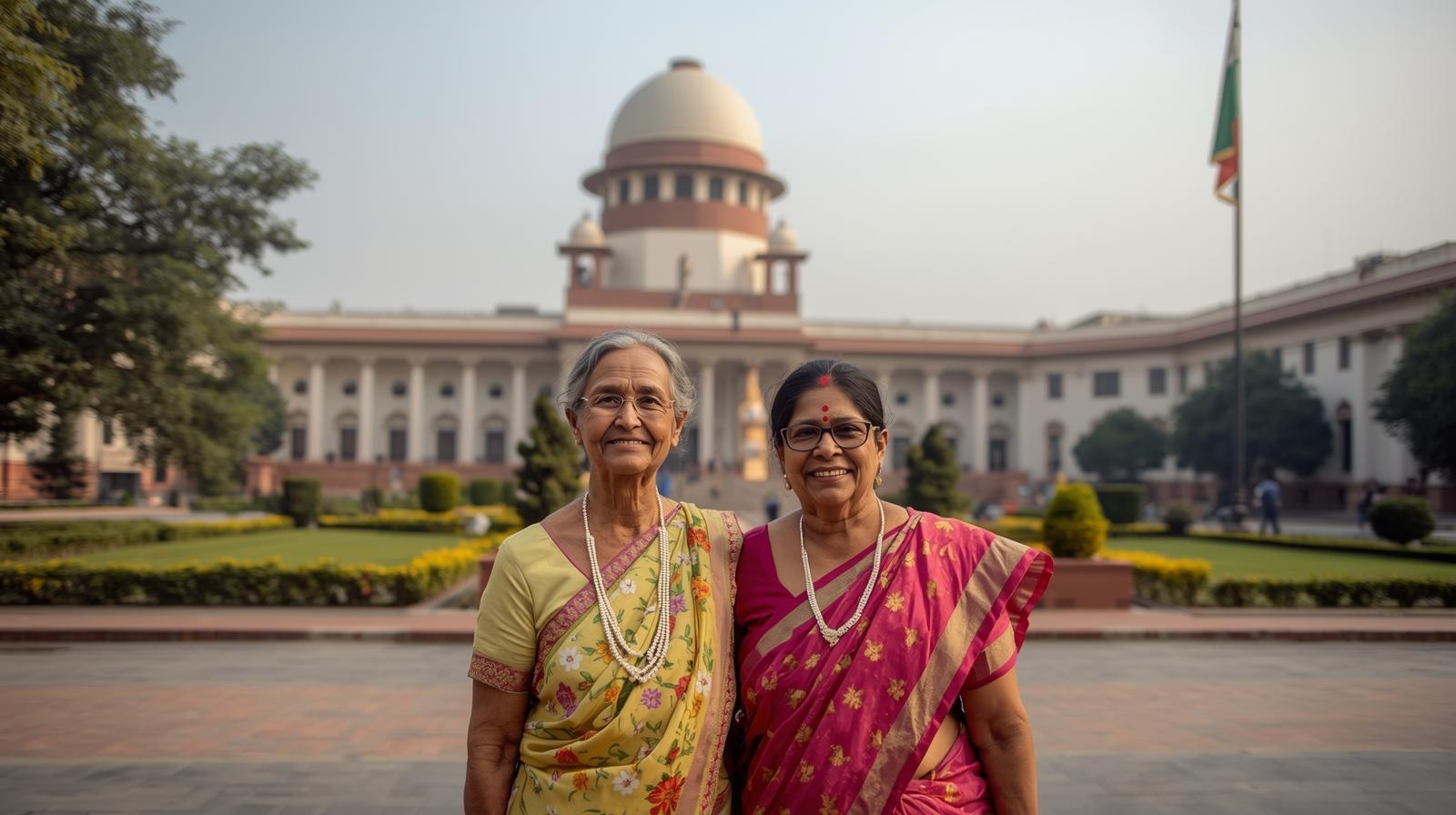
For nearly a century, many Indian families—especially in Mumbai, Kolkata, and Chennai—could not act on a will without first going to court for probate. That mandatory requirement has now been scrapped by the Repealing and Amending Act, 2025, fundamentally changing how inheritances will work across India.
1. A quiet revolution in Indian inheritance law
For decades, Section 213 of the Indian Succession Act, 1925 forced certain families to obtain probate or letters of administration before any rights under a will could be legally established. This rule especially affected wills connected to the old “Presidency towns” of Mumbai (Bombay), Kolkata (Calcutta), and Chennai (Madras), and applied mainly to Hindus, Buddhists, Sikhs, Jains and Parsis.
In 2025, Parliament passed the Repealing and Amending Act, 2025, which deletes Section 213 and makes consequential changes to Section 370 on succession certificates. With this single step, the law has moved from compulsory court validation in many cases to a framework where probate is optional rather than mandatory.
2. First things first: What exactly is probate?
Probate is a court‑supervised process where a judge confirms that a will is genuine, was properly executed, and represents the deceased’s last testament. Once satisfied, the court issues a probate order in favour of the executor named in the will, giving them legal authority to collect assets, pay debts and distribute property to beneficiaries.
In practical terms, probate acts like a judicial “seal of approval” on the will. Banks, registries, housing societies and other third parties rely heavily on this seal to feel safe in transferring money, property and shares without fear of future disputes.
3. How things worked before: The old Section 213
Before the 2025 change, Section 213 said that no right as an executor or legatee could be established in any court unless probate or letters of administration had been obtained, or the will was deposited in a specific way under the Registration Act. Courts interpreted this to mean that for certain communities and areas, probate was a legal pre‑condition to relying on a will for immovable property or for many formal transactions.
This rule operated in a narrow but powerful way:
It applied mainly to Hindus, Buddhists, Sikhs, Jains and Parsis.
It was triggered when the will was made within the original civil jurisdiction of the High Courts of Mumbai, Kolkata and Chennai, or when it dealt with immovable property in those territories.
This meant a modest middle‑class flat in Mumbai left by will to a single child could still require a full probate petition, public notices, court hearings and payment of court fees before transfer.
4. The 2025 reforms: What changed in law?
The Repealing and Amending Act, 2025 does three crucial things for inheritance law:
Omission of Section 213
Parliament has completely removed Section 213 from the Indian Succession Act, 1925. This ends the statutory rule that certain executors or legatees could not establish rights under a will without first obtaining probate or letters of administration.acuitylaw+2Alignment of related provisions
References to Section 213 and “probate” in Section 370, which governs when succession certificates can be issued for debts and securities (such as bank accounts, FDs and shares), have been amended. This allows succession certificates to be granted even where earlier the law insisted on probate.Uniformity across India
With Section 213 gone, the old Presidency‑town carve‑out and religion‑specific application are dismantled, moving towards a more uniform succession regime nationwide. Probate continues to exist as a remedy and evidentiary tool, but no longer as a compulsory gatekeeper.
The Act received Presidential assent in December 2025 and was notified in the Gazette shortly thereafter, with implementation expected from early 2026 onwards. Existing probate cases continue under the old framework due to savings clauses, but new estates will follow the reformed rules.
5. What “probate no longer mandatory” actually means
“Probate no longer mandatory” does not mean “probate abolished.” Instead, it means:
Executors and beneficiaries are no longer legally barred from asserting their rights under a will solely because they do not have probate, at least in situations previously covered by Section 213.
In many straightforward cases, heirs can approach banks, depositories, housing societies and sub‑registrars directly with the original will, death certificate and supporting KYC or indemnities.
However, key provisions governing how probate is granted (such as Sections 222, 276, 283) remain untouched. Courts will continue to grant probate wherever an executor voluntarily applies for it, especially in contested or high‑value estates.
6. Why this matters so much for families
The reform is not just a technical tweak; it directly affects cost, time and stress for ordinary families. Key benefits include:
Lower legal costs
Probate previously involved court fees that could be calculated as a percentage of estate value in several states, along with lawyer’s fees and incidental expenses. By making probate optional, many uncontested estates can now be settled more cheaply.Faster access to assets
Court‑based probate could easily stretch for 1–3 years or more because of backlogs, public notices, and procedural steps. Now, families can often use succession certificates or direct institutional processes to claim assets in a fraction of that time.Fairness and uniformity
The old rule treated similarly placed families differently based on city and religion, something commentators long criticised as discriminatory and outdated. The omission of Section 213 removes this unevenness and brings greater consistency to Indian succession law.
7. The flip side: New risks and grey areas
As with any major reform, there are trade‑offs that responsible estate planners must recognise.
Higher dispute risk
Without the “court seal” of probate, a will may be easier for disgruntled heirs to challenge later, especially if execution formalities were weak, witnesses are unavailable, or the document is vaguely drafted.khaitanco+2Institutional hesitation
Many banks, housing societies and registrars have standard by‑laws that simply say “probate required” for transmission of property based on a will. These internal rules will need updating, and until they are, frontline officers may continue to insist on probate, at least in complex cases.getyellow+3Transition confusion
During the initial months, families may encounter inconsistent practices—one branch accepts a will plus indemnity, another insists on a court order. Clear documentation, registered wills and professional guidance will be critical to navigate this interim phase smoothly.
8. When families should still consider probate
Even under the new law, there are several situations where voluntarily seeking probate remains wise.
Known or likely disputes
If one or more heirs is likely to contest the will or allege undue influence, probate gives a structured forum for notices, objections and evidence, making the eventual probate order strong proof of validity.khannaandassociates+2Large or complex estates
Where the estate spans multiple cities, includes business interests, foreign assets, or high‑value properties, probate can provide comfort to buyers, banks and corporate registries that the executor’s authority is beyond doubt.linkedin+2Demand from institutions
Certain institutions—especially foreign banks, conservative registries or listed‑company RTA/IEPF processes—may still insist on probate before recognising transmissions. In such cases, probate remains the cleanest route to avoid future title problems.khaitanco+2
A strong blog section here can include short case‑style examples contrasting a simple uncontested flat in Hyderabad (no practical need for probate) vs a disputed commercial property in South Mumbai (probate still prudent).cleartax+2
9. What this means for your existing will
If you already have a will, especially if it was drafted with Mumbai, Chennai or Kolkata assets in mind, this is the right time for a review.iwills+2
Consider checking:
Whether your will contains assumptions like “my executor shall obtain probate” that may no longer be necessary in every case.iwills+2
Whether the will is clearly drafted, properly signed and witnessed, and safely stored—because without mandatory probate, the original document and its execution quality become even more important.iwills+2
Whether you should still opt for registration, or for a clause that instructs the executor to seek probate only if any dispute or institutional demand arises.iwills+2
A simple “will health check” can ensure that your document is aligned with the new legal reality and that your family does not pay unnecessary cost or face avoidable delays.iwills+2
10. Drafting a will in the post‑2025 world
For Indians who are yet to write a will—or want to create one that is future‑proof under the reformed law—some best practices stand out.iwills+2
Crystal‑clear executor appointment
Name one primary executor and at least one alternate, with full details and powers spelt out clearly. This becomes crucial when there is no automatic court oversight through compulsory probate.iwills+2Precise asset and beneficiary descriptions
Provide detailed identifiers for immovable properties, bank accounts, demat holdings, insurance policies and digital assets so that institutions can act without hesitation.iwills+2Strong attestation and storage
Ensure the will is signed in front of two independent witnesses, preferably younger and easily traceable, and stored in a safe but accessible location or with a professional custodian.iwills+2Thoughtful guidance on probate and succession certificates
Consider adding language that authorises the executor to seek probate or succession certificates wherever beneficial, without making it a blanket obligation.youtubepkpandya+1
These elements dramatically increase the chances that institutions will accept your will without insisting on unnecessary litigation.whalesbook+2
11. Special angles: NRIs and metro families
The reforms are especially significant for two groups that iwills.in already serves extensively.iwills+2
NRIs with Indian assets
NRIs often hold property and financial assets in Mumbai or other metros and previously faced mandatory probate despite living abroad. With Section 213 gone, a carefully drafted Indian‑law will, backed by notarised documents and PAN/KYC, can often be implemented through local representatives without a full probate battle.Urban families in former Presidency towns
For families in Mumbai, Kolkata and Chennai, what used to be a near‑automatic probate requirement for even uncontested wills is now replaced by more flexible, documentation‑driven processes. This makes it even more important that wills are clear, updated and accessible—because courts will not be vetting every document by default.
12. How iWills.in can help you navigate the new regime
The new law rewards families who plan early and use technology to keep their estate documents strong, updated and easy to act on.
On iwills.in, users can:
Create legally sound wills tailored to Indian law, with prompts that reflect the post‑2025 probate landscape and clarify when executors may still choose court validation.iwills+2
Capture detailed asset, nominee and heir information, including digital assets, so that banks and registries feel confident processing claims without automatically demanding probate.iwills+2
Access guidance, checklists and (through partners) legal assistance for cases where voluntary probate, succession certificates or additional documentation remain advisable.iwills+2
In other words, the law has removed one major hurdle—but the responsibility to plan wisely has shifted even more firmly to individuals and families. A clear, well‑drafted will created on iwills.in can ensure your loved ones benefit from these reforms instead of getting lost in the transition.
Share this article
Join 10,000+ Indians who have secured their legacy with iWills India.