
Lent Money to Family or Friends? How to Include It in Your Will
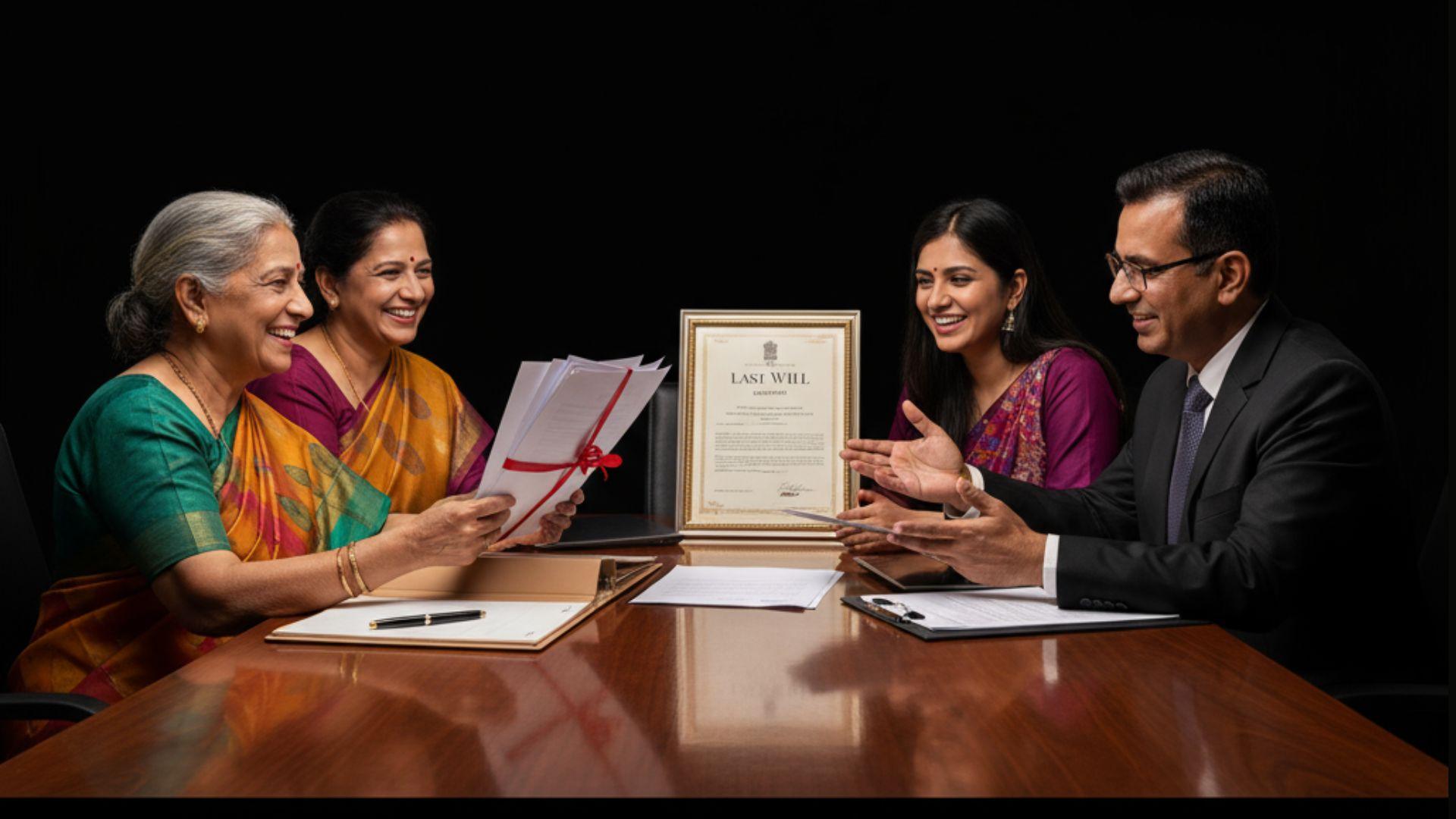
When preparing a Will, most people remember to list their real estate, bank accounts, fixed deposits, and investments. However, one financial asset is frequently overlooked: money lent to others.
Whether you have lent ₹10 lakh to a child to help purchase a home, assisted a sibling during a financial emergency, or extended a loan to a friend or business associate, that unpaid amount does not automatically become a gift if you pass away before it is repaid.
Depending on the circumstances, a valid debt owed to you remains a receivable of your estate. Under the Indian Succession Act, 1925 (Sections 305 and 319, where applicable), an executor is empowered and required to collect the deceased's property and debts with reasonable diligence. If your Will is silent on how to handle these loans, your executor may be legally obligated to pursue recovery—potentially causing friction within your family—or may struggle to distribute your estate fairly.
Addressing outstanding loans in your Will ensures your executor knows what exists, how to treat each debt, and how to divide your remaining assets according to your wishes.
Step 1: Decide How Your Will Should Treat the Outstanding Loan
When accounting for loans given to others in a Will, your instructions depend on the nature of the relationship, whether the transfer was a formal loan or informal family support, and your broader succession goals.
Consider a practical example: A parent has an estate worth ₹1 crore and two children, Child A and Child B. The parent previously lent ₹10 lakh to Child A, of which ₹8 lakh remains unpaid at the time of the parent's death.
Depending on the parent's intention, there are three primary ways to structure this in the Will:
Option A: Recover the Loan for the Estate
If the loan was a commercial transaction, or if you want the unpaid principal returned to your estate pool before distribution, your Will should direct your executor to collect the balance.
- How it works in the example: The executor recovers the ₹8 lakh from Child A. Subject to estate administration expenses and liabilities, the distributable estate increases to ₹1.08 crore, which is then divided according to the Will.
- Practical caveat: Recovery is not automatic. It depends on the legal enforceability of the claim, documented proof of the loan, and whether the debt is within the statutory limitation period.
Option B: Forgive or Release the Debt
If you do not want your executor to demand repayment from a family member or friend after your passing, your Will must explicitly release the borrower from the obligation. Note that releasing an existing debt by Will is legally distinct from making a transfer that was intended as an outright gift from the outset.
- How it works in the example: The Will identifies the original ₹10 lakh loan to Child A and explicitly directs that whatever balance remains unpaid at the date of death (₹8 lakh) stands released and forgiven. Child A owes nothing back to the estate, and the remaining ₹1 crore estate is distributed as specified in the Will.
- Planning for fairness: Forgiving a substantial debt to one child without adjusting the remaining estate gives that child a larger overall financial benefit. If you want the forgiven amount to leaves other beneficiaries unaffected, use Option C instead.
Option C: Adjust the Beneficiary’s Inheritance (Hotchpot / Equalisation)
A testator may want previous financial assistance given to one beneficiary brought into account when dividing the remaining estate. Adjusting an inheritance is not automatically the same as forgiving the debt—your Will must explicitly address both the status of the outstanding loan and the mathematical adjustment to the beneficiary's inheritance share.
- How it works in the example: The parent wants both children to be treated equally overall, without forcing Child A to pay ₹8 lakh in cash back to the estate. The Will must clearly specify two things:
- Treatment of the debt: The ₹8 lakh unpaid balance is released upon death so the executor does not sue Child A for recovery.
- Treatment of the inheritance share (Hotchpot calculation): For computation purposes, the ₹8 lakh unpaid loan is notionally added to the ₹1 crore estate (totalling ₹1.08 crore, or ₹54 lakh per child). The ₹8 lakh already retained by Child A is deducted from Child A's share. Child A receives ₹46 lakh from the estate, and Child B receives ₹54 lakh.
- What if the loan exceeds the inheritance share? Your Will should also state whether the beneficiary is required to pay back any excess if the unpaid loan is larger than their share of the estate, or if their obligation is capped at reducing their inheritance share to zero.
Step 2: Maintain a Separate Loan Register Alongside Your Will
Because borrowers make partial repayments over time, hardcoding static outstanding balances inside your Will without context can create ambiguity. However, relying solely on an informal external note carries legal risks, as an unattested external list or Letter of Wishes does not automatically form a legally binding part of a Will under Indian law.
The safest approach combines clear testamentary rules inside your Will with an updated administrative record kept alongside it:
- State the governing rule in your Will: Clearly specify in the Will itself whether specific loans (or classes of loans) are to be recovered, forgiven, or adjusted against the borrower's inheritance share.
- Keep an updated Loan Register for your executor: Maintain a separate physical or digital file containing:
- Borrower's full name, contact information, and relationship to you.
- Original principal amount, date of disbursement, and agreed interest or repayment terms.
- A chronological log of repayments received and the current balance.
- Copies of loan agreements, promissory notes, bank transfer records, and signed acknowledgments.
Key Legal Considerations in India
1. Documentary Proof of the Loan
Informal transfers to friends or relatives without documentation are difficult for executors to enforce. If a borrower claims the transfer was an unconditional gift rather than a loan, the estate bears the burden of proving the debt. Always preserve bank transfer trails specifying the purpose of the transfer, written loan agreements, or formal acknowledgments.
2. The Limitation Period Under the Limitation Act, 1963
Mentioning a debt in your Will does not revive a claim that has already become time-barred. Under the Limitation Act, 1963, most civil claims for recovering unsecured money lent are subject to a three-year limitation period, though the exact starting point depends on the structure of the loan:
- Loans without a fixed repayment date (or payable on demand): Under Articles 19 and 21, the three-year clock generally starts from the date the loan is actually made (disbursed), not from the date a demand for repayment is made.
- Loans with a fixed repayment date or schedule: Under Articles 37 or 55, the three-year period typically runs from the specified repayment date or the date of default/breach.
- Secured loans (Mortgages): Under Article 62, claims to enforce payment of money secured by an immovable property mortgage generally carry a 12-year limitation period.
Resetting the clock: Under Sections 18 and 19 of the Limitation Act, a fresh limitation period begins only if the borrower provides a signed written acknowledgment of liability or makes a documented part-payment before* the existing limitation period expires.
Review long-standing loans periodically to ensure they have not lapsed beyond legal recovery.
3. Tax and Legal Review
Where an outstanding loan is substantial, involves commercial interest, or requires complex inheritance equalisation, have the specific testamentary clauses reviewed by a legal and tax professional under current Indian legislation (including the Income-tax Act, 2025) to prevent unintended tax or succession disputes.
Frequently Asked Questions (FAQs)
1. Does a loan I gave to someone automatically get cancelled when I die?
No. Unless your Will explicitly forgives or releases the debt, a legally valid and enforceable loan remains a receivable of your estate, and your executor is generally responsible for recovering it for your beneficiaries.
2. Can I forgive a family loan in my Will without being unfair to my other children?
Yes. Rather than simply forgiving the debt in isolation, your Will can include an inheritance-adjustment (equalisation) clause that releases the borrower from repaying cash to the estate while deducting the unpaid loan balance from their share of your remaining estate.
3. What if the borrower repays part of the loan after I have written my Will?
To avoid amending your Will every time a repayment is made, draft your Will's clause to apply to "the unpaid principal balance remaining at the time of my death" rather than stating only a fixed rupee figure, and track the exact repayments in your supporting loan register.
Record Your Succession Wishes Clearly
Accounting for money you have lent to family, friends, or associates protects your loved ones from ambiguity and post-demise disputes. Whether you intend for an outstanding loan to be collected, forgiven, or balanced against an inheritance share, putting clear instructions in your Will gives your executor the clarity needed to carry out your wishes.
Share this article
Join 10,000+ Indians who have secured their legacy with iWills India.