
Can a Beneficiary Draft a Will in India? What the Law Says
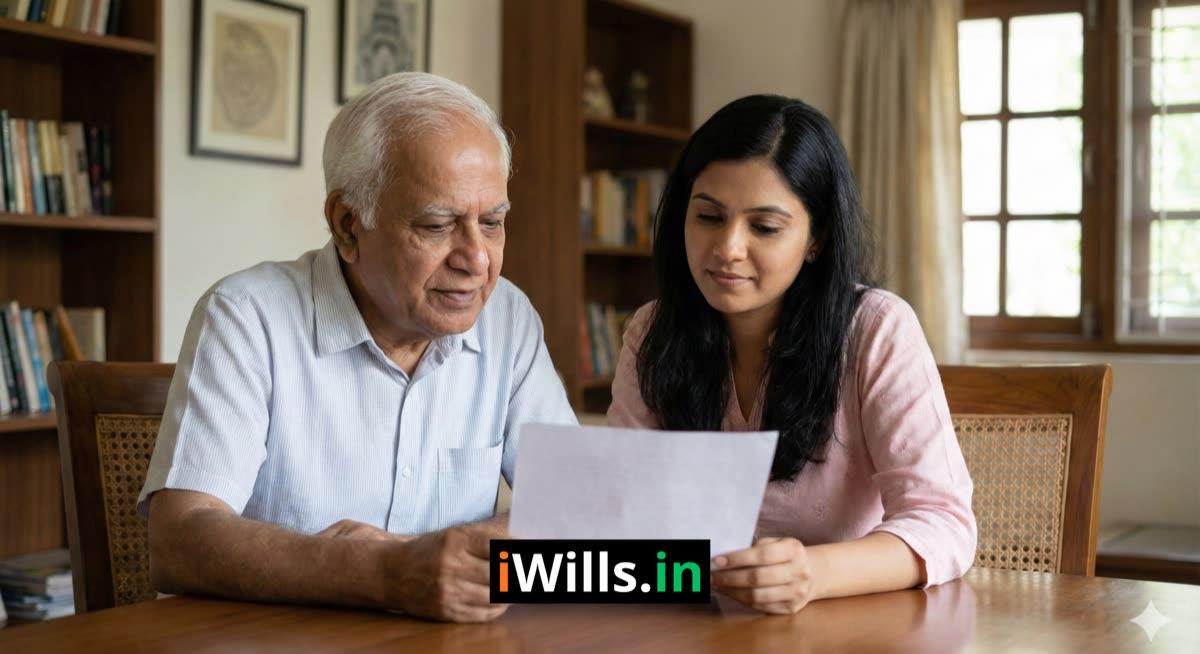
Helping someone write a Will is not automatically a problem. Controlling the Will is.
Under Indian law, there is no blanket prohibition preventing a beneficiary from physically assisting, typing, or scribing a testator’s Will. However, physical assistance is fundamentally different from controlling what the document says.
If a beneficiary takes a leading, active role in framing the terms of the Will and simultaneously receives a substantial benefit under it, that involvement can constitute a "suspicious circumstance." Under Indian succession jurisprudence, when suspicious circumstances surround the execution of a Will, the person seeking to uphold it (the propounder) must dispel those suspicions to the satisfaction of the court's conscience before the court accepts the Will as genuine and duly proved.
Understanding the legal boundary between clerical assistance, substantive drafting, and formal attestation is essential for ensuring an estate plan remains enforceable.
1. Typing vs. Drafting vs. Witnessing: Key Legal Distinctions
Much of the confusion around this topic stems from treating every form of help as legal "drafting." Under the Indian Succession Act, 1925, these three roles carry distinct evidentiary and statutory consequences:
[Typing / Scribe]             [Drafting Content]               [Attesting Witness]
Clerical assistance only  →   Substantive input on terms   →   Signatory to execution
Lowest legal risk              Requires caution                Special statutory rules
A. Typing or Scribing the Will
An elderly parent may have a precise plan for distributing their self-acquired assets but may struggle with technology, keyboarding, or handwriting due to age or physical ailments. If an adult child simply types the document verbatim at the parent’s dictation, the child acts purely as a scribe.
Acting as a scribe does not invalidate the document. The central evidentiary question for the court remains: Did the testator understand and approve the contents as typed?
B. Drafting the Contents
Drafting involves determining the structure, framing legal clauses, or actively deciding how assets should be divided. When a beneficiary assumes control over drafting:
- The beneficiary’s active participation may become a central fact if the Will is later contested on grounds of suspicious circumstances or undue influence.
- A beneficiary drafting the Will does not automatically establish undue influence, but where that beneficiary receives a significant legacy, the court will closely scrutinize the surrounding circumstances to verify whether the document represents the free and independent mind of the testator.
Key Takeaway:
A beneficiary helping to prepare a Will does not, by itself, make the Will invalid. The court looks at the entire surrounding circumstances to determine whether the Will represents the testator's free and genuine wishes.
C. Witnessing the Will (Attestation)
Physical drafting must not be confused with legal attestation. Under Section 63 of the Indian Succession Act, 1925, the Will must be attested by two or more witnesses, each of whom has seen the testator sign or affix their mark, or has received from the testator a personal acknowledgment of that signature or mark.
Witnessing involves special statutory rules under Section 67:
- Section 67 provides that if an attesting witness (or their spouse) is also a legatee under the Will, the bequest to that person or spouse is void.
The Statutory Exemption:* By virtue of Section 57 read with Schedule III of the Act, Section 67 does not apply to Wills executed by Hindus, Buddhists, Sikhs, or Jains.
Best Practice:* Even where statutory rules do not automatically invalidate the bequest, as a matter of good practice, beneficiaries and their spouses should preferably not act as attesting witnesses. Selecting independent, disinterested witnesses substantially reduces the scope for later allegations concerning the integrity of the execution.
2. Judicial Scrutiny and "Suspicious Circumstances"
In landmark rulings such as H. Venkatachala Iyengar v. B.N. Thimmajamma, the Supreme Court of India established the evidentiary framework governing contested Wills:
- The propounder must first prove due execution and testamentary capacity (that the testator was of sound mind and understood the nature of the disposition).
- If suspicious circumstances are present—such as an active role played by a major beneficiary in the preparation or execution of the Will—the court requires the propounder to satisfactorily explain and remove those suspicions.
- Once suspicious circumstances are dispelled, any party alleging distinct vitiating factors, such as fraud, coercion, or undue influence, must substantiate those claims with evidence.
Indian courts evaluate beneficiary involvement alongside other contextual factors:
Note on Fairness: The Supreme Court has repeatedly observed that a court does not sit as a court of appeal over a testator’s choices. A Will is not invalid merely because it treats children unequally or appears unfair to natural heirs. The law’s concern is not equality of distribution, but whether the distribution was the testator's voluntary act.
3. Practical Safeguards When Assisting a Family Member
When helping an aging parent or relative organize an estate plan, straightforward safeguards ensure the document reflects their true intentions and avoids needless dispute:
- Keep Decision-Making Firmly with the Testator: Ensure the testator personally reviews every clause and asset allocation. Online drafting tools and structured platforms are helpful for formatting, but the underlying substantive decisions must belong entirely to the testator.
- Articulate Reasons for Unequal Allocations: If an estate plan departs from standard intestate succession—for instance, acknowledging a child who handled long-term care—recording those reasons directly in the text helps explain the context if questions arise later.
- Choose Disinterested Attesting Witnesses: Have the execution witnessed by at least two independent individuals who have no financial stake in the estate and are not related to any named beneficiaries.
- Assess the Value of Registration: Under Section 18 of the Indian Registration Act, 1908, registration of a Will is optional. While registration does not by itself cure defects in testamentary capacity, undue influence, or improper execution, it can provide useful corroborative evidence regarding the factum of execution before an official authority.
- Contemporaneous Medical Evidence (Optional): Where there is a genuine concern about the testator's mental capacity, obtaining contemporaneous medical evidence from a registered medical practitioner may provide useful supporting evidence of the testator's condition at the time of execution. It is not, by itself, conclusive proof of testamentary capacity.
Can a Son or Daughter Help Their Parent Make a Will?
This is one of the most common scenarios in Indian households. Aging parents frequently ask an adult son or daughter to handle the logistics—operating the computer, purchasing stamp paper (if desired, though not legally mandatory), or coordinating an online drafting platform.
Helping your parent in this manner is legally permissible, provided two boundaries are observed:
- The content must originate from the parent: The parent should clearly state who gets what. If the child suggests, dictates, or alters the distribution—especially in their own favor—it opens the door to claims of coercion or undue influence by other siblings later.
- Step aside for attestation: When it comes time to sign and witness the document, the adult children named as beneficiaries should step back. Have the signing witnessed by two independent, disinterested individuals who can independently confirm that the parent signed voluntarily and with a clear mind.
Frequently Asked Questions
Can a son draft his father's Will in India?
Yes. A son can assist his father in typing or scribing a Will. However, if the son receives a substantial benefit under that Will while other legal heirs are excluded, that participation may be scrutinized as a suspicious circumstance, requiring proof that the father acted freely and with full comprehension.
Does an Indian Will need to be drafted by an advocate?
No. The Indian Succession Act does not require a lawyer to draft a Will. A testator may prepare their own Will or use a structured Will-drafting platform, provided the document satisfies the statutory requirements of execution and attestation under Section 63.
Can a beneficiary be an attesting witness to a Will in India?
While Section 67 (which voids bequests to attesting witnesses) does not apply to Hindus, Buddhists, Sikhs, and Jains under Schedule III, having a beneficiary sign as an attesting witness is strongly discouraged as a matter of practice. It invites needless suspicion regarding execution.
Does registering a Will protect it from being challenged?
No. Registration provides formal evidence of execution before the Sub-Registrar, but it is not conclusive proof of validity. An aggrieved heir can still challenge a registered Will on grounds of lack of testamentary capacity, fraud, coercion, or undue influence.
Disclaimer: This article is provided for general educational purposes only and does not constitute formal legal advice. Succession laws and their application can vary depending on personal laws, religious affiliation, and specific facts. Consult an advocate or estate planning professional for guidance on individual circumstances.
Share this article
Join 10,000+ Indians who have secured their legacy with iWills India.