
Blended Families, Second Marriages, and Step‑Children: The Hidden Inheritance Traps Under Indian Law (And How a Will Can Fix Them)
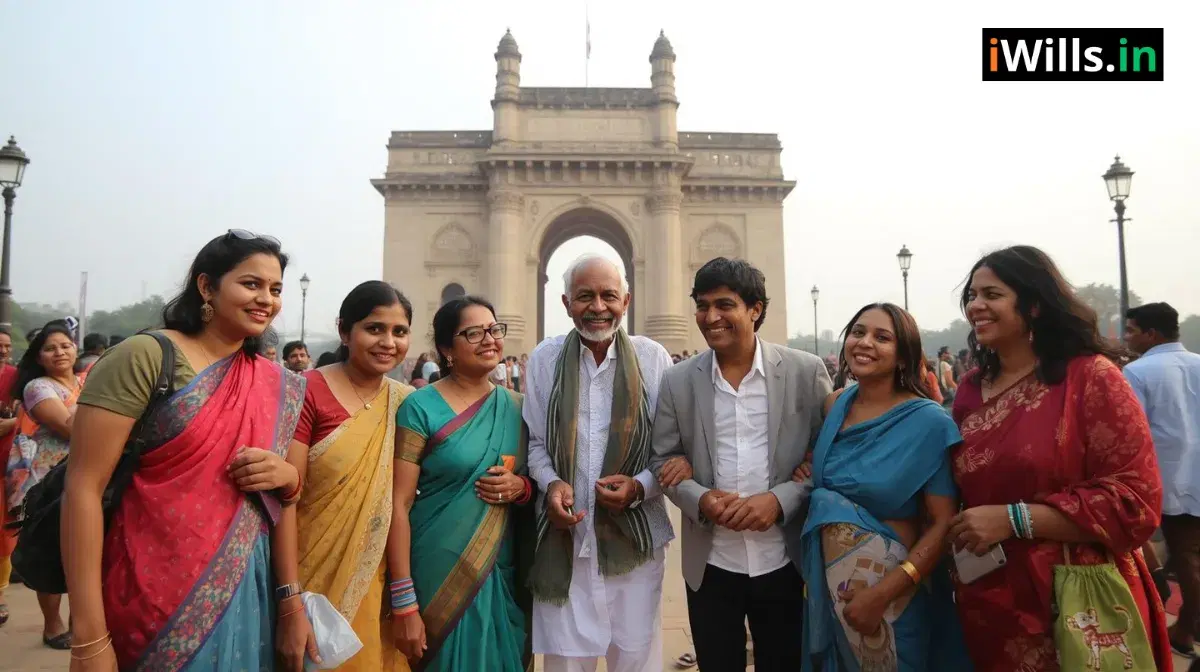
Indian families are changing faster than Indian inheritance laws. Second marriages, step‑children, late marriages, and long‑term partners are now common across cities and towns—but succession rules still largely assume a single, lifelong marriage and a “simple” joint family. That gap between modern family structures and old legal rules is exactly where the biggest inheritance disputes for blended families are arising today.iwills+3
The new Indian family (and why the law hasn’t caught up)
Divorce, remarriage, and cohabiting relationships have risen steadily in India, especially in urban centres, even as families increasingly own multiple properties, financial investments, and digital assets. Despite this, core succession laws—the Hindu Succession Act, Indian Succession Act, and Muslim personal law—were drafted in a very different era and still presume a conventional marital and family setup.iwills+2
In practice, this means that if you die without a will (intestate), the law distributes your assets according to a rigid family tree, not according to your emotional bonds or the realities of your blended family. That is how loving step‑children can be left with nothing, ex‑spouses may still control assets, or a woman’s property can go to in‑laws instead of her own parents or siblings.iwills+3
What exactly is a “blended family” in India?
For inheritance purposes, a “blended family” can include several real‑life situations:
A second marriage where one or both spouses have children from earlier relationships.nuvamaprivate
Step‑children who are raised as one’s own but are never formally adopted.corpbiz
Long‑term live‑in partners, sometimes while the person is still legally married to someone else.howell-jones
Widows or widowers who remarry, with children spread across two households and two sets of in‑laws.nuvamaprivate+1
These setups are emotionally normal but legally complicated. The law cares about specific labels—“spouse”, “child”, “adopted child”, “heir”—not about who you feel responsible for. When there is no clear will, blended families often discover that the person they thought of as “family” is, in law, a stranger.iwills+3
How intestate law treats second marriages and step‑relations
For Hindus, Jains, Sikhs, Buddhists
If a Hindu dies without a will, self‑acquired property generally goes first to Class I heirs—spouse, children (including adopted children), and mother, all in equal shares. Children from different marriages are all Class I heirs, so sons and daughters from the first and second marriage share equally, which can surprise families who assumed the “current” family would get more.iwills+2
However, step‑children have no automatic right in the estate of a step‑parent unless they are legally adopted, even if they were raised in that household for years. A particularly harsh rule for Hindu women is section 15 and 15(2) of the Hindu Succession Act: if a married Hindu woman dies without a will and without children, property she inherited from her husband or father‑in‑law often goes back to her husband’s heirs, not to her own parents or siblings.iwills+4
For Christians, Parsis and others under the Indian Succession Act
Christians and many others are governed by the Indian Succession Act, 1925, which has its own formula: where there is a spouse and children, the spouse and children share the estate (commonly one‑third to spouse and two‑thirds collectively to children). Again, step‑children who are not legally adopted are not automatically “children” in the eyes of this law.iwills+3
Parsis also follow statutory schemes that split property in a fixed pattern between spouse, children, and sometimes parents; these rules are precise about who qualifies as heir and do not recognise informal step‑relationships. If the deceased has no will but has children from multiple marriages, all legal children participate in the same pool—but step‑children and partners without legal marriage are left out.finnovate+2
For Muslims under personal law
Muslim inheritance typically follows Quranic or personal‑law rules with fixed shares for spouses, children, parents, and certain other relatives. All legitimate children—whether from the first or second marriage—have defined shares, but again, step‑children or partners outside a valid nikah do not inherit unless provided for through gifts during lifetime or a will within the one‑third bequest limit.housing+2
Across all these regimes, the pattern is clear: the law protects legally recognised relationships, not blended‑family bonds that were never formalised on paper.finnovate+1
High‑risk blended‑family scenarios that almost guarantee disputes
Several patterns show up again and again in inheritance litigation and advisory work:
Second marriage + property in second spouse’s name: Children from the first marriage fear being disinherited, while the second spouse assumes they will “naturally” control everything.corpbiz+1
Step‑children who were never adopted: The step‑parent believed “all children will be treated equally”, but in law those step‑children have no claim if there is no will naming them.corpbiz
Separated but not divorced + new partner: The legal spouse remains the heir, while the long‑term partner and their children may receive nothing, even if they were financially dependent.willwriters+1
Hindu woman in second marriage with inherited assets: Due to section 15(2), certain assets she received from her first husband or father‑in‑law can revert to that husband’s family if she dies childless and intestate, potentially bypassing parents, siblings, or even children from another relationship.livelaw+2
Courts increasingly see disputes where informal expectations (“everyone knows who this was meant for”) collide with rigid statutory rules, and judgments repeatedly underline that only a clear will can override these default outcomes.vidhilegalpolicy+2
Why a clear, modern will is non‑negotiable for blended families
A properly drafted will lets you design a customised inheritance plan that reflects your actual family, not just your legal paperwork. In a blended‑family context, a will can:iwills+1
Allocate different but fair shares between children of different marriages, instead of forcing them into equal statutory shares.fwlls+1
Protect a second spouse with a right to live in the house or a life interest, while preserving the underlying ownership for children from a previous marriage.fwlls+1
Explicitly provide for step‑children and long‑term partners who otherwise have no statutory inheritance rights.willwriters+1
Override harsh intestate rules for Hindu women’s self‑acquired property, ensuring it goes to chosen beneficiaries rather than mechanically following section 15(2).scobserver+2
This ties in directly with themes iwills.in already emphasises: a will is not just for the wealthy, nominees are not owners, and “if there’s no will, the wife gets everything” is a dangerous myth. For blended families, these myths can be financially devastating.iwills+2
Practical will‑planning checklist for blended families
When writing for your platform, you can convert this into a boxed checklist or bullets your readers can follow:
Map your real family, not just your paperwork
List your current spouse, ex‑spouse(s), children from each relationship, step‑children, adopted children, parents, and in‑laws.nuvamaprivate+1
Note who is actually financially dependent on you, regardless of whether the law automatically recognises them as heirs.iwills+1
List all assets and how the law currently sees them
Separate self‑acquired property from inherited property and ancestral property where relevant.piramalfinance+1
Identify which personal law applies to you (Hindu Succession Act, Indian Succession Act, Muslim personal law) for different types of assets.iwills+1
Decide exactly who should get what
For the family home, decide: should your spouse have a right to live for life, with ownership eventually passing to children from all marriages, or only some?fwlls+1
Decide whether and how to provide for step‑children or partners who otherwise have no default rights.willwriters+1
Align nominees, joint holdings, and your will
Ensure bank, insurance, mutual fund, and DEMAT nominees match the overall plan in your will; remember, nominees are custodians, not final owners.iwills+1
Review joint accounts and joint property ownership to avoid “sideways disinheritance” where everything flows to a joint holder and never reaches the intended children.carbonlawpartners+1
Consider extra tools where needed
In complex or high‑value blended families, consider using family arrangements or simple trusts (where legally feasible) to lock in the protection of both spouse and children.nuvamaprivate+1
For NRIs or families with cross‑border assets, ensure wills are aligned across jurisdictions and personal laws, something iwills.in already highlights as critical.iwills+1
What might change in the law—and why you can’t wait for it
Section 15 of the Hindu Succession Act, especially 15(2), has been widely criticised as discriminatory and out of sync with modern realities, and is under active constitutional and policy scrutiny. Draft amendment bills and legal commentary suggest a growing push to correct gender biases and better reflect how property actually moves within families.sansad+5
However, legal reform is slow, contested, and uncertain in its final shape. Even if Parliament amends some provisions, no legislation can perfectly capture the unique mix of ex‑spouses, step‑children, partners, parents, and siblings in every blended family. The only reliable way to ensure your second spouse, your children (from all relationships), and your step‑children are treated exactly as you intend is to write a clear, up‑to‑date will—and revisit it when your relationships or assets change.iwills+4
Share this article
Join 10,000+ Indians who have secured their legacy with iWills India.