
The Silent Exclusion: Why Some Mothers Inherit Nothing When a Son Dies Without a Will
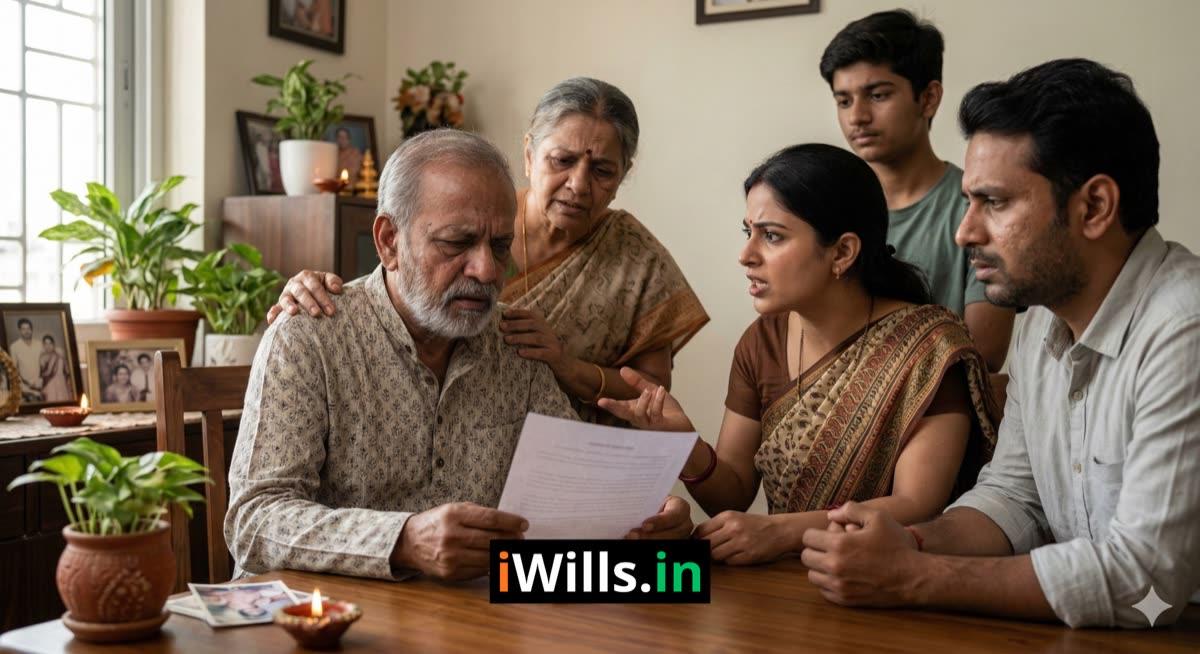
When a loved one passes away without leaving a Will (dying "intestate"), most families assume the law will distribute assets "fairly" among the closest kin. In India, however, "fairness" depends entirely on which religious personal law applies to you.
A recent landmark ruling by the Karnataka High Court has brought a startling reality to light: Under the Indian Succession Act, 1925, a mother may be completely excluded from inheriting her son’s property if he is survived by a wife and children.
The Case That Sparked the Conversation
The ruling involved a Christian family where a son passed away without a Will. His mother claimed a share of his estate, a request initially supported by a trial court. However, the High Court overturned this, clarifying that because the deceased was Christian, the Indian Succession Act applied—and under this Act, the mother is not a primary heir if a spouse and children are present.
Two Laws, Two Very Different Realities
To understand why this happened, we have to look at the divergence between Hindu law and the law governing Christians and certain other communities in India.
1. Under the Hindu Succession Act (HSA), 1956
For Hindus, Sikhs, Jains, and Buddhists, the mother is considered a Class I heir.
The Rule: If a man dies intestate, his property is divided equally among his wife, his children, and his mother.
The Result: The mother has a mandatory legal right to a share, regardless of whether the son had children.
2. Under the Indian Succession Act (ISA), 1925
This Act governs Christians and those married under the Special Marriage Act.
The Rule (Sections 32 & 33): If a man leaves behind a widow and "lineal descendants" (children/grandchildren), the widow gets one-third, and the children get two-thirds.
The Catch: The mother only inherits if there are no lineal descendants.
The Result: If the son has even one child, the mother is legally "postponed" and receives nothing from the estate.
The Financial and Emotional Impact
This legal nuance can lead to devastating consequences. In many Indian households, an elderly mother may be financially dependent on her son. If that son is Christian and dies without a Will, his mother could find herself with no legal claim to his bank accounts, property, or investments, leaving her entirely dependent on the goodwill of her daughter-in-law or grandchildren.
How to Protect Your Family: The Power of a Will
The Karnataka High Court’s ruling serves as a massive wake-up call for succession planning. The law only steps in when you remain silent.
A Will Overrides the Act: If the son in this case had written a simple Will bequeathing a portion of his assets to his mother, the court would have honored that wish.
Clarity for All Religions: Whether you are governed by the HSA or the ISA, a Will allows you to provide for a dependent parent, a sibling, or a charity—people who might otherwise be excluded by "default" legal formulas.
Key Takeaways:
Check your governing law: Know if you fall under the Hindu Succession Act or the Indian Succession Act.
Mothers are not always "Class I": In Christian law, the nuclear family (wife/kids) excludes the mother.
The Will is the Shield: A Will is the only way to bypass these rigid statutory rules.
Final Thought
Legal "default settings" are rarely one-size-fits-all. While the law prioritizes the nuclear family (spouse and children) in the Indian Succession Act, it may inadvertently leave a vacuum for aging parents.
Don't leave your family's future to the complexities of succession acts. Whether it’s a simple handwritten document or a registered Will, taking the time to define your legacy is the only way to ensure every loved one is looked after.
Share this article
Join 10,000+ Indians who have secured their legacy with iWills India.