
The Will is Signed... Now What? The Truth About Custody, Discovery, and "Opening" the Will
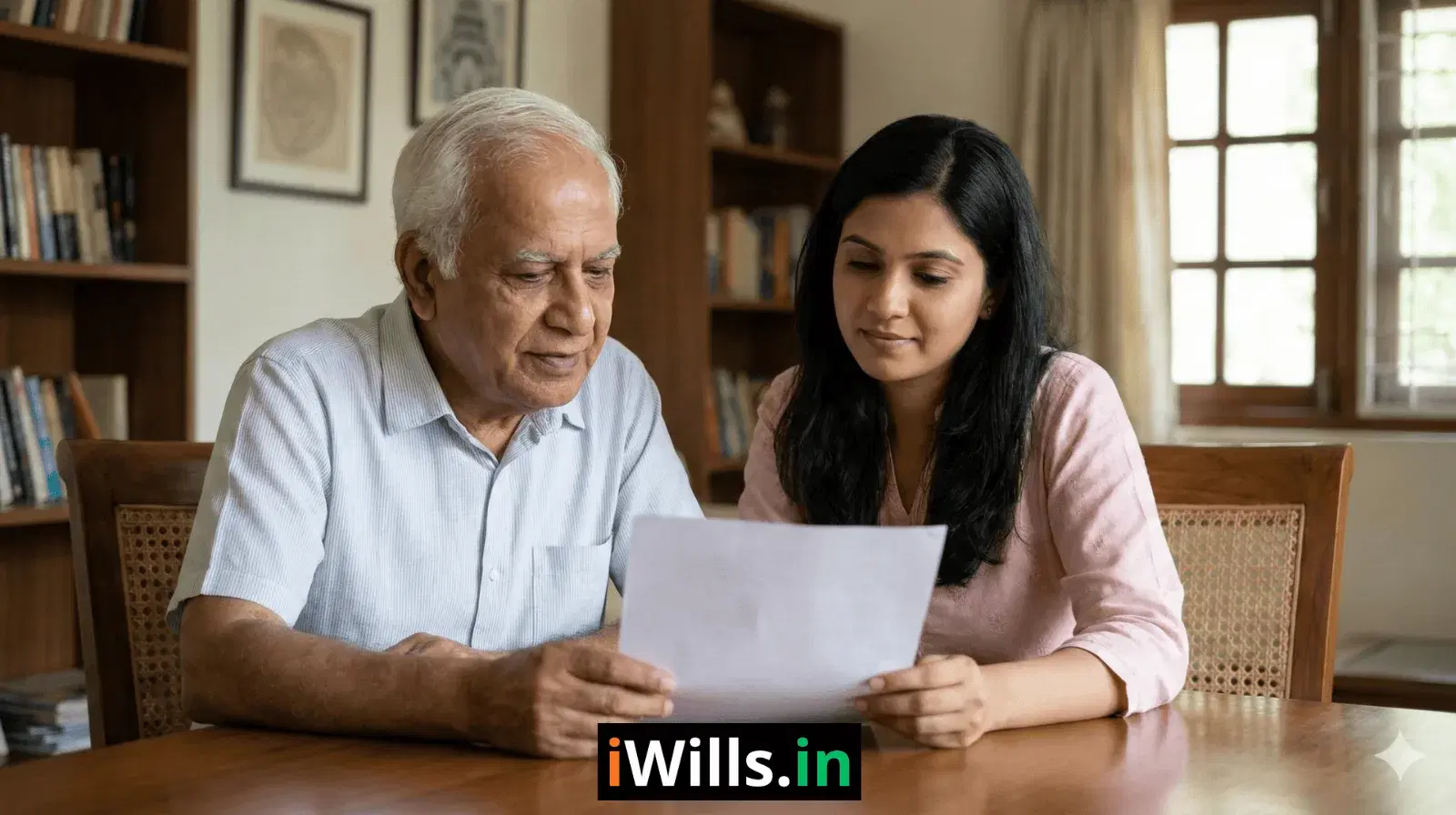
Many people believe that drafting and signing a Will is the final step in estate planning. In reality, it is only the halfway mark. You have created the roadmap for your family, but that roadmap is useless if it stays hidden in a drawer, buried under decades of paperwork, or locked in a safe that no one can open.
The harsh reality is that a perfectly valid Will is worthless if it cannot be found when it is needed. If the document remains missing, the law often presumes you died without one, potentially undoing all your careful planning.
Once you have drafted your Will, the critical questions shift from "What do I write?" to "Where do I keep it?" and "Who opens it?" This guide breaks down the legal reality of custody, possession, and the "opening" of a Will in India under the Indian Succession Act, 1925 and the Registration Act, 1908.
1. Who Should Keep the Will? (The Law on Custody)
Legally, the Will remains the property of the Testator (the person making the will) until their death. There is no single mandatory place to keep it, but there are three common legal routes:
Option A: Personal Custody (The "Trust" Route)
Most people keep the original Will in a personal safe, bank locker, or with a trusted lawyer. The risk here is that if the Will is lost or accidentally destroyed, it is presumed revoked. Furthermore, if it is in a bank locker, the locker itself might be frozen upon death, making retrieval a legal hurdle in itself.Option B: The Executor
You can hand the sealed Will directly to the Executor (the person you appoint to carry out your wishes). This ensures immediate possession upon death and eliminates the "treasure hunt" for the document.Option C: Deposit with the Sub-Registrar (The "Ironclad" Route)
Under Section 42 of the Registration Act, 1908, you can deposit your Will in a sealed cover with the District Registrar. The cover is super-scribed with the testator's name and the nature of the document. The Registrar keeps it in a fire-proof safe. This is considered the safest legal custody in India.
iwills Pro-Tip: If you keep the Will at home, ensure your Executor knows exactly where it is. A Will that cannot be found is legally treated as if you died without one (Intestate).
2. How Does the Executor Know? (Discovery)
Unlike in the movies, there is no automatic "Will Alert" system or central registry notification for private Wills. The discovery of the Will relies almost entirely on communication.
The Testator's Duty: You must inform the Executor while you are alive that they have been appointed and exactly where the Will is stored.
The Search: If the Executor was not informed, they are legally permitted to search the deceased's personal papers.
The Registrar Scenario: If the Will was deposited with the Registrar, the Executor (or heirs) can apply to inspect the records to see if a Will exists, but they can only do this after the death of the testator.
3. "Opening" the Will: Legal Law & Procedure
This is where Indian law differs significantly from fiction. The procedure depends on where the Will was kept.
Scenario A: The Will is in Private Custody
Who opens it? The Executor or the close family members found the document.
The "Reading": There is no legal requirement for a ceremonial "reading" of the Will in front of all heirs. The Executor simply reads the document to understand the instructions.
Witnesses: You do not need the original witnesses present just to open the envelope. However, you will need to contact them later to verify their signatures if you need to go to court.
Scenario B: The Will is with the Registrar (Sealed Cover)
If the Will was deposited under Section 42, the opening procedure is strict and is governed by Section 45 of the Registration Act, 1908:
Application: After the Testator’s death, any person can apply to the Registrar to open the cover.
Proof of Death: The applicant must produce the official Death Certificate to the Registrar's satisfaction.
The Opening: The Registrar opens the sealed cover in their office.
The Copying: The Registrar copies the contents into their official book and then releases the certified copy to the applicant. This is the official "opening."
4. Is "Opening" the Will Enough? (Probate vs. Possession)
Just because you have opened the envelope doesn't always mean you can access the assets.
The Legal Law: Under the Indian Succession Act, 1925, merely possessing the Will allows you to distribute personal items (like jewelry, furniture, or cars) if the family is in agreement.
The Probate Requirement: For immovable property or high-value assets (bank accounts, mutual funds), banks and courts often demand Probate.
Probate is the official "proving" of the Will by a court.
This is the stage where the witnesses are legally required to appear and testify that they saw the Testator sign the Will.
Conclusion
The safety of your legacy depends on three things: Possession, Communication, and Process.
Keep the original safe. Tell your Executor today that a Will exists. And remember, you don't need a movie-style ceremony to open it—you just need clear instructions. If you fear family disputes, consider depositing the Will with the Registrar for that extra layer of Section 42 protection.
But are you?
In a recent and alarming development (December 2025), the Supreme Court has delivered a harsh reality check to Indian families: If your key witness turns "hostile" in court, your Will could instantly collapse.
This ruling reinforces a terrifying loophole in Indian inheritance law: A Will is valid on paper, but if the witness says "I didn't see him sign it" when called to the stand years later, the document is treated as waste paper.
Here is why this ruling matters to you and how to stop a "Traitor Witness" from erasing your legacy.
The "Turncoat" Scenario: What Just Happened?
In the case highlighted by recent judgments, a family produced a valid Will after the father's death. It was contested by an unhappy relative. When the matter went to court, the judge called the "Attesting Witness" (a neighbor who had signed the Will years ago) to testify.
Under cross-examination, perhaps due to bribery, memory loss, or pressure from the opposing side, the witness said:
"Yes, that is my signature. But I wasn't actually present when the father signed. I signed it later at his house."
The Verdict: The Supreme Court held that since the strict requirement of Section 63 of the Indian Succession Act (signing in the presence of witnesses) was not met according to the witness's own testimony, the Will was discarded.
The Result: The property reverted to Natural Succession rules. The unhappy relative who was supposed to get nothing ended up getting an equal share. The father's wish was erased by one sentence from a witness.
Why Does the Witness Have So Much Power?
A Will is the only legal document in India that is effective after the author dies. Because you aren't there to defend it, the law relies entirely on the two people who watched you sign it.
If those people die, disappear, or—worst of all—turn against you (turn hostile), the validity of your Will hangs by a thread.
Who is at Risk?
You are at high risk if your witnesses are:
Older than you: If they pass away before you, proving the Will becomes a legal nightmare.
Neighbors/Casual Friends: Relationships fade. A neighbor today might be a stranger (or an enemy) 10 years from now.
Easily Manipulated: If your witness can be bought or threatened by a disgruntled heir, your Will is weak.
The Solution: How to "Bulletproof" Your Will
You cannot predict human behavior, but you can create evidence that overrides a lying witness.
1. The "Video Will" (The Ultimate Evidence)
This is your strongest defense. While signing your Will, record a video.
What to record: You reading the Will, signing it, and camera panning to the witnesses signing it in front of you.
Why it works: If a witness later says, "I wasn't there," the video proves them a liar in court. Courts increasingly accept video evidence to save Wills from hostile witnesses.
2. The Doctor’s Certificate
Always have a doctor sign your Will as one of the witnesses or attach a medical certificate acting as a testament to your sound mind. Doctors are professional witnesses who are less likely to turn hostile or be intimidated.
3. Pick "Younger & Professional" Witnesses
Don't just ask your uncle. Ask a younger colleague, a chartered accountant, or a professional who has a reputation to maintain. At iWills, we often recommend using professionals who understand the legal weight of their signature.
The Bottom Line
A Will is not just a piece of paper; it is a promise. Don't let that promise depend on the shaky memory or loyalty of a neighbor. Is your Will witness-proof?
Don't take the chance. At iWills, we guide you on how to execute a Will with "Video Confirmation" protocols that stand the test of time and "turncoat" witnesses.
Share this article
Join 10,000+ Indians who have secured their legacy with iWills India.