Digital Privacy Meets Legacy: How India’s DPDP Act Is Quietly Transforming Wills & Inheritance
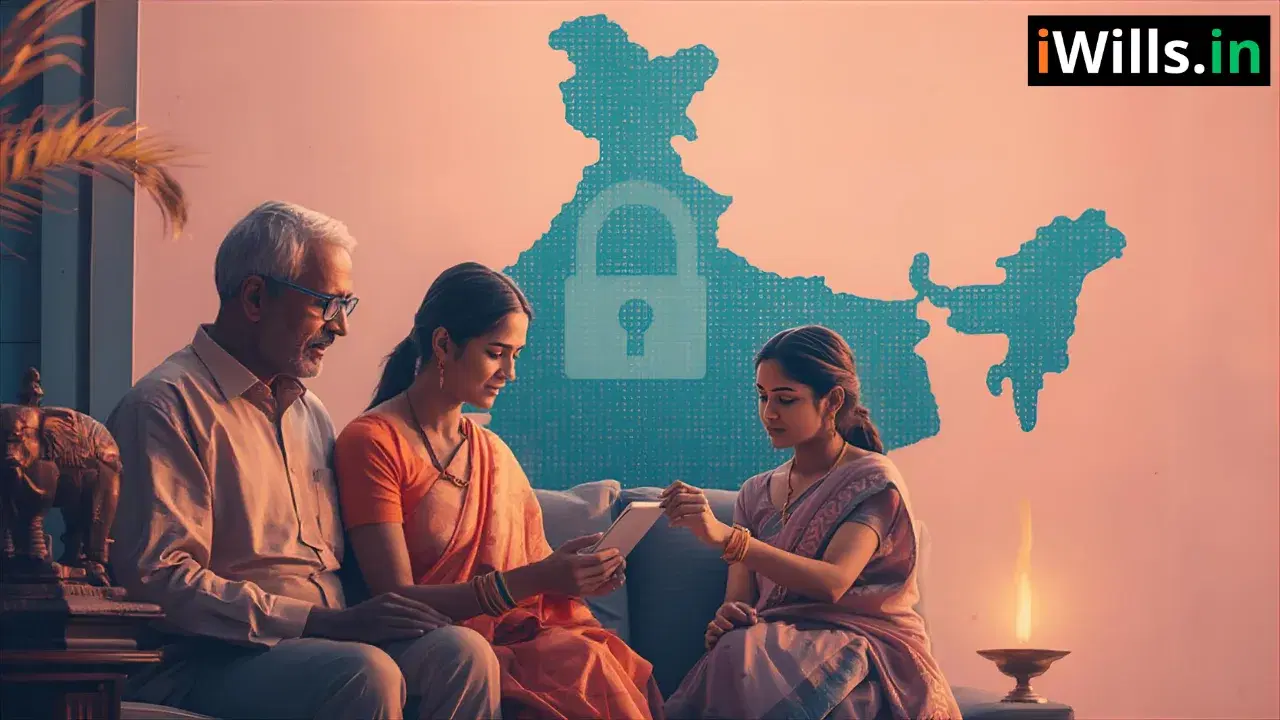
On a quiet Monday morning in Pune, two brothers sat across a bank manager, convinced that their late father had left behind fixed deposits, mutual funds, and a solid insurance policy. They remembered the email alerts, the SMS notifications, the investment app icons on his phone. But they had no passwords. No access to his email. No way into his insurance portal or investment accounts. The wealth existed—they were certain of it—yet it felt strangely unreal, trapped inside digital systems no one could open. This scene is no longer rare. As our lives move online, so do our assets, our memories, our identities, and our legacy. Inheritance is no longer just about property and paperwork; it now reaches into cloud drives, encrypted accounts, and data trails that families may not even know exist. And that raises a new, urgent question for every Indian household: How will your family know what you owned, and how will they access it? India’s new Digital Personal Data Protection Act (DPDP Act) marks a major shift in how personal data is governed—and quietly, it is reshaping the way we must think about Wills, digital assets, and the future of inheritance.
Our Wealth Has Gone Digital—But Our Wills Haven’t Caught Up
For generations, families dealt with a physical world of inheritance:
A steel cupboard.
A folder of policies.
A passbook.
A property file.
A locker key.
Today, wealth looks very different:
Bank statements in email
Mutual funds in apps
Demat accounts linked to mobile OTPs
Insurance documents in cloud drives
UPI balances, digital wallets, crypto keys
Loan and liability details stored digitally
Photos, unfinished books, unpublished thoughts in digital archives
Your heirs may inherit your assets. But if they cannot find them—or cannot prove they exist—the law cannot help them. This is why the DPDP Act matters far beyond the tech world.
The DPDP Act in Simple Words
The Digital Personal Data Protection Act is India’s new privacy law. It governs how your personal data is:
collected,
stored,
processed,
shared, and
deleted.
It gives you rights over your data—and holds organisations responsible for protecting it. But one provision holds extraordinary importance for estate planning. You can nominate a person to exercise your data rights after your death or incapacity. Think of this person as a guardian of your digital rights.
They may be able to:
Request access to your personal data
Ask platforms to correct or erase data (where legally allowed)
Raise complaints if your data is misused
Support your family in accessing information needed for inheritance
It is a quiet but powerful shift in Indian law.
Inheritance Is No Longer Only About Assets — It’s About Data
The DPDP Act does not change India’s inheritance laws.
Who inherits your house, gold, money, shares or land is still governed by:
The Indian Succession Act, 1925
The Hindu Succession Act, 1956
Personal and customary laws
However, while these laws decide who gets your assets, the DPDP Act influences how your family will access the information needed to claim them.
A Will says:
|My daughter shall inherit my investments.
The DPDP era asks:
|How will your daughter know where those investments are? Who is allowed to seek that data?
Without answers, a Will may grant assets that remain practically unreachable.
Traditional Executor vs Digital/Data Nominee
Until recently, estate planning mostly involved naming an Executor—the person who ensures your Will is followed. But in a digital estate, another role emerges:
They may be the same person, or different—depending on your wishes. If they are not aligned, families may face:
Delays in gaining access to information
Platforms refusing access due to privacy rules
Disputes about data exposure vs. privacy protection
Estate planning is becoming a partnership between property rights and data rights.
The Digital Afterlife: What We Leave Behind Has Changed
Earlier, a person’s legacy was physical—land, letters, objects, and photographs.
Now, a legacy includes:
Photos that exist only in a Google Drive
Personal writings in Notes apps
Voice messages that hold memories
Emails with the last instructions or wishes
Unfinished creative work stored in files
Subscription accounts and paid tools
Content creator revenue accounts
Digital assets and tokens
A part of our identity continues to live in servers and clouds. Whether it is protected, preserved, or deleted—depends on planning.
Short-Term Impact (1–3 Years)
You may notice:
More transparent data consent practices in Will drafting platforms and legal offices
Requests to nominate a Data/Digital Rights contact
Better security and encrypted document storage
Families increasingly needing data access during inheritance
Long-Term Impact (3–10 Years)
We are moving toward a future where:
Wills will routinely include digital asset and data access clauses
Banks, fintechs, and insurers will have clear legal pathways for heirs
Digital vaults will store asset maps and directives
AI-driven estate discovery may support executors
Unclaimed assets may reduce significantly
Estate planning will transform from a property file to a data ecosystem.
What You Should Do Now
If you want your loved ones to avoid confusion and conflict, take these steps:
Create a Will that includes digital and financial information guidance.
Maintain a secure list of key accounts and assets.
Nominate a Data/Digital Rights person under DPDP to handle data access.
Store your Will securely (digitally with encrypted protection or in physical safety).
Update it periodically as life and assets evolve.
Closing Reflection
As India steps into a new era of digital privacy through the DPDP Act, it becomes clear that inheritance is no longer just about the transfer of wealth, but about the transfer of access, information, and identity. Our assets live in bank accounts, apps, emails, cloud folders, and digital wallets—and without a Will that acknowledges this reality, families may be left searching for what they rightfully deserve. The law now empowers us to choose who may act on our behalf in the digital space, but it is our responsibility to ensure that our loved ones have a clear roadmap to navigate our legacy. Creating a Will is no longer a formality; it is an essential act of protection, compassion, and foresight. In a world where our memories, decisions, and wealth are increasingly stored as data, a thoughtfully written Will ensures that what we leave behind is not confusion and conflict, but clarity, dignity, and peace.
Share this article
Join 10,000+ Indians who have secured their legacy with iWills India.