
Ancestral Property and Undivided Shares in India: The 2025 Guide Every Family Should Read
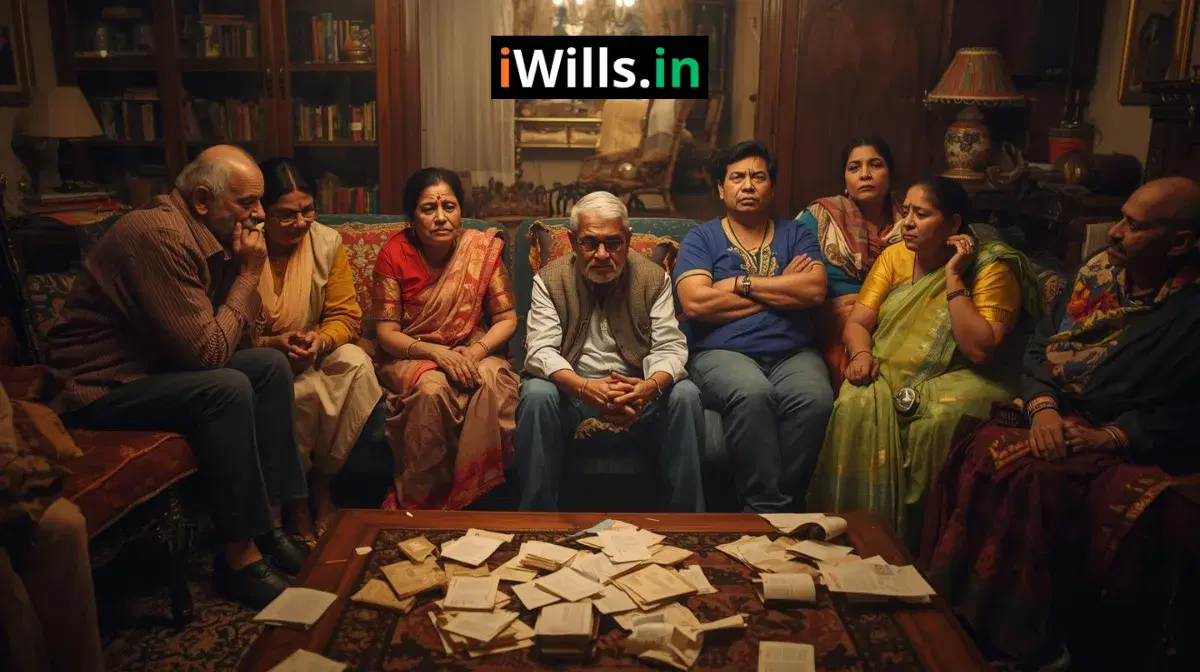
“Ancestral property” and “undivided share” are two phrases that appear in almost every big inheritance dispute in India. Many families assume that ancestral land can never be sold without everyone’s consent, or that each person owns a fixed piece they can point to on the ground. In law, the position is very different. Understanding what is truly ancestral, what an undivided share means, and when a single heir can sell or will that share is now essential for sensible succession planning and will‑writing.economictimes+2
This blog explains these concepts in simple language, using the latest 2025 developments from courts and commentators, so that Indian families—and especially users of online will platforms—can make informed decisions.
What is “ancestral property” in Hindu law?
Under Hindu law, ancestral property is a very specific category. Not every inherited asset qualifies. Commonly accepted criteria include:nobroker+3
Four‑generation rule: The property has passed undivided through at least four generations in the male line—typically from father, grandfather, great‑grandfather, and great‑great‑grandfather.
Not self‑acquired: The property was not originally bought by the current holder from their own earnings; it was inherited from ancestors in the male lineage.
No prior partition: The property has remained undivided among family members. If there has been a valid partition, each person’s portion ceases to be “ancestral” for that branch and becomes that person’s separate or self‑acquired property.
When these conditions are met, the property forms part of a Hindu coparcenary. Daughters and sons now both have a right by birth in such ancestral property, thanks to the 2005 amendment to the Hindu Succession Act and later judgments confirming daughters as full coparceners.indianbarassociation+3
If any of these conditions is missing—if, for example, the property was bought by the father from his salary, or if there was a formal partition earlier—then it is treated as self‑acquired or inherited property, not ancestral, and different rules apply.scconline+2
What is an “undivided share” in ancestral property?
In an undivided Hindu joint family, each coparcener has a theoretical or undivided share in the ancestral property. This has a few important features:legalkart+3
The share exists in law but is not mapped to a specific room, floor, or plot until a partition takes place.
The size of each person’s share can change over time as new coparceners are born or others die, until the moment of partition.
Until partition, every coparcener jointly owns every inch of the ancestral property, even though they may be in separate physical possession in practice.
Once a valid partition occurs—through a registered deed, family settlement, or final court decree—each person’s portion becomes their separate property. They can then sell, gift, or will it like any other self‑acquired asset.sci+3
Latest 2025 developments: can a single heir sell an undivided share?
A key practical question has always been: can one coparcener sell their undivided share in ancestral property without everyone’s consent? Recent Supreme Court rulings and legal commentary in 2024–25 give a more detailed picture.basichomeloan+3
Important points from these decisions and analyses include:
Transfer of undivided share is legally recognised: Courts have reiterated that a co‑owner or coparcener can transfer their undivided interest in joint property. What they cannot do is transfer the entire property, as if the other co‑owners do not exist.mahendrabhavsar+2
Supreme Court’s 2025 stance: Reporting on a 2025 verdict notes that the Supreme Court accepted that a single heir can sell their undivided share in ancestral property without prior partition, provided the property has not been formally divided and there is no legal restriction imposed by a will, agreement, or statute.rprealtyplus+2
Effect on the buyer: The buyer typically steps into the shoes of the selling coparcener and gains the right to seek partition. Actual, exclusive possession of a specific part of the land or house still depends on a partition process, either by mutual agreement or through the courts.patraslawchambers+1
At the same time, other decisions emphasise limits:
A co‑owner cannot, by themselves, execute a valid sale of the entire joint property in a way that binds other co‑owners who never consented.delhilawacademy+1
Sale deeds that purport to transfer more than the seller’s own undivided share, or that are executed without required consideration, can be challenged and sometimes declared void.mahendrabhavsar+1
The overall direction in 2025 is that individual rights in undivided shares are recognised and can be transferred, but not at the cost of other co‑owners’ interests.
When does ancestral property stop being ancestral?
Several 2025 judgments and explainers make an important clarification: ancestral status is not permanent. It can end in various ways.indialawoffices+4
Common situations where ancestral property loses that character:
Partition within the family: Once ancestral property is partitioned—by a registered deed, family arrangement, or final court order—each allotted portion becomes the recipient’s separate or self‑acquired property. Future generations then have no “by‑birth” rights in that portion as ancestral property.sci+3
Blending or mixing with self‑acquired assets: Where a coparcener intentionally mixes ancestral property with their own self‑acquired property and treats the whole as joint family property, courts may treat everything as part of the coparcenary. Conversely, if they keep it clearly separate, the self‑acquired property is not treated as ancestral just because it was inherited from someone.scconline+2
Property received through certain kinds of succession: Courts have held that self‑acquired property passing through a female line or through specific transfers (for example, from a mother or sister) may remain the separate property of the recipient, not part of the ancestral pool, even if it came by inheritance.indialawoffices+1
For families, this means that simply calling a property “ancestral” in conversation does not make it so. The legal history of how the asset came down, and whether there were earlier partitions, matters more than family labels.
How do undivided shares affect wills and inheritance planning?
Undivided shares play a central role in how wills work in joint Hindu families. A few practical points are especially important:legalhelpnri+3
A will generally covers only what the person actually owns: When a coparcener writes a will, they can usually dispose of their own share in ancestral property—not the entire joint property. If they purport to bequeath the whole, the will is effective only to the extent of their share.basichomeloan+2
Share can be determined at death: In ancestral property, the exact fraction belonging to each coparcener is often not fixed in day‑to‑day records. At the time of death, the law treats the deceased’s notional share as if a partition had happened just before death, and that share then passes under the will (or, if there is no will, to Class I heirs).economictimes+2
Post‑partition wills look different: After a formal partition, the property a person receives is their separate property. Any will they make after that can freely cover the entire allotted portion, just like any other self‑acquired asset.legalkart+2
For will‑writers, the key is to clearly identify:
Which properties are truly ancestral.
What approximate share they hold in each.
Whether there has been any earlier partition, family settlement, or court decree.
This clarity reduces disputes later about whether a bequest was valid and how much it actually covered.
Why these rules matter for Indian families in 2025
Recent articles and judgments stress that many inheritance disputes in India now revolve around ancestral vs inherited property, daughters’ equal rights, and who can sell what without consent. The 2025 developments sharpen a few realities:economictimes+3
Daughters and sons are now treated as equal coparceners in ancestral property, so any calculation of undivided shares must include daughters as well.nobroker+2
A single coparcener has more recognised freedom than before to transfer their undivided share, but not to override the rights of others in the entire property.rprealtyplus+2
Once ancestral property is partitioned, its character changes, and future planning should treat it as self‑acquired for each branch, including for purposes of wills, gifts, and sales.nobroker+3
For families looking to avoid disputes, the law now rewards documentation and clarity: updating records, recording partitions properly, and drafting wills that honestly reflect the mix of ancestral and self‑acquired property.
Key takeaways
Not every inherited property is “ancestral”; strict legal tests apply, and ancestral status ends once a valid partition occurs.economictimes+2
An undivided share is a legal fraction in joint property, not a specific room or plot. Coparceners co‑own the whole until partition.indianbarassociation+2
Recent 2025 decisions acknowledge that a single heir can transfer their undivided share in ancestral property in many situations, but they cannot unilaterally sell the entire property to the detriment of other co‑owners.basichomeloan+3
After partition, each person’s portion becomes separate property, and can be freely sold or willed like any other self‑acquired asset.sci+3
For clear, dispute‑free inheritance, families benefit from understanding these distinctions and ensuring that their wills and property documents match the legal reality, not just family assumptions.economictimes+3
Share this article
Join 10,000+ Indians who have secured their legacy with iWills India.